Commercial Moves in Chelsfield
Commercial Moves in Chelsfield require more than simply transporting boxes from one place to another. For local businesses, the process can affect trading hours, staff productivity, customer service, stock control, equipment safety, and even the morale of a team. Whether you are relocating a small office, moving a retail unit, shifting a workshop, or planning a full business relocation, the aim is the same: move efficiently, protect your assets, and keep disruption to a minimum.
Chelsfield is a distinctive part of the Borough of Bromley, with a mix of residential streets, commercial premises, village-style local services, and convenient access to surrounding areas such as Orpington, Knockholt, Green Street Green, Well Hill, and Farnborough. That mix creates real moving challenges: narrow roads in some places, busy local routes at peak times, parking limitations near business premises, and a need to work carefully around staff, neighbours, and customers. A local team that understands commercial removals in Chelsfield can make a meaningful difference on moving day.
Businesses looking for office removals, business relocation, and commercial moving services usually want practical answers quickly: what is included, how long it will take, how to prepare, and how to avoid costly downtime. This page is designed to help local customers in Chelsfield make informed decisions and plan a smoother move, whether the project is straightforward or more complex.
Why local businesses choose commercial moving support in Chelsfield

Moving a business is rarely just about the premises. It often means coordinating people, IT equipment, files, display stock, furniture, tools, and specialist items that need careful handling. A commercial move in Chelsfield can involve anything from a small professional office to a larger multi-room operation, and the best approach depends on the layout, access, timing, and the nature of the equipment being moved.
Local knowledge matters because Chelsfield has a varied character. Some premises are easier to access with loading space nearby, while others may sit along roads where parking is tight or turning space is limited. A mover who understands the area can plan vehicle positioning, loading schedules, and route choices more effectively. That helps reduce delays and makes it easier to complete work safely and neatly.
Another important reason businesses seek a local service is timing. Many companies prefer moves outside normal trading hours, at weekends, or in phases so that operations can continue with as little interruption as possible. A good commercial removals plan takes those realities into account, especially for offices, clinics, shops, and light industrial units where downtime can affect both staff and customers.
Types of commercial moves we help with

Commercial moving needs vary widely from one business to another. In Chelsfield, we regularly see requests from companies that need support with a whole range of premises and equipment. Each move needs its own careful planning because what works for a small office may not suit a storage unit, and a retail relocation will have different priorities from a workshop move.
Typical commercial removals include office relocations, shop moves, professional practice transfers, storage reorganisation, and business-to-business equipment transport. Some customers need a complete premises move with desks, chairs, filing systems, monitors, and archive material. Others only need help with a few heavy items, specialist machinery, or stock that must be moved without damage.
Below are some of the most common types of commercial moves in Chelsfield:
- Small office moves and whole office relocations
- Retail unit moves and stock transfers
- Clinic, practice, and treatment-room relocations
- Workstation dismantling and reassembly
- Document, archive, and filing transport
- Warehouse, storage, and light industrial moves
- Furniture and equipment transfers between sites
- Phased relocations to reduce downtime
Moves for local businesses of different sizes
Smaller businesses often need flexibility and speed. Larger companies may need more detailed planning, labelled packing systems, and an agreed sequence for each department. A local removals team can adapt to both. The aim is not to force every business into the same model, but to build a move that fits your premises, your deadlines, and your operational priorities.
What is included in a commercial removal service?

A well-planned commercial removals service should do more than turn up with a van and carry items out of the building. Businesses in Chelsfield generally need support that is organised, safe, and efficient from start to finish. The exact service may vary depending on your property type and the scale of the move, but customers usually benefit from a clear process and a practical checklist.
Common inclusions in a commercial move may involve pre-move planning, protected transport, careful loading and unloading, and the handling of office furniture, equipment, and other business assets. Many customers also ask for assistance with dismantling larger items and reassembling them at the destination, especially when time is limited or specialist tools are needed.
Typical service features can include:
- Initial discussion about the premises, inventory, and timings
- Planning for access, parking, and loading points
- Protection for floors, walls, and furniture where needed
- Careful movement of desks, cabinets, chairs, and shelving
- Transport of boxed items, records, and business equipment
- Loading and unloading with attention to item order and placement
- Optional dismantling and reassembly of larger items
- Coordination for phased or out-of-hours moves
Some businesses also need help with commercial packing. That can be especially useful for files, electronics, stock, and breakable items. Packing support can make the move more orderly and reduce the chance of items ending up in the wrong room or department.
Why proper planning matters
Planning is often the difference between a move that feels controlled and one that becomes chaotic. A clear moving plan helps allocate tasks, identify fragile items, and decide which items should be moved first. It also allows your team to prepare work areas properly and make sure that essential items are easy to locate on arrival.
Local challenges when moving a business in Chelsfield
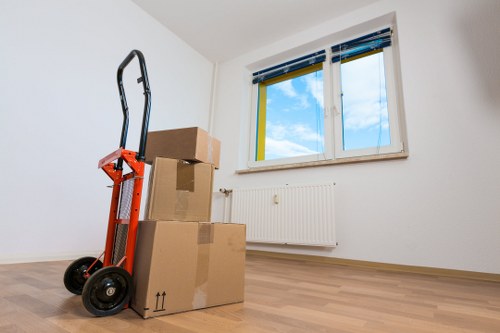
Chelsfield may be a well-connected location, but commercial moves here can still present the same practical issues found in many busy local areas. Roads can be busy at the wrong time of day, parking spaces may be limited near certain properties, and access can vary depending on whether your premises are on a main route, in a mixed-use area, or tucked away on a smaller street.
For some businesses, access is the main concern. A large vehicle may not be suitable for every road or driveway, so the moving plan may need to account for shuttle transfers, staging areas, or timed loading. For others, the challenge is not access but the sheer amount of contents that need to be moved in a short window without affecting customers or staff.
Properties in and around Chelsfield include a mix of modern offices, converted spaces, retail units, and business premises that may not have generous service entrances. That means movers need to work carefully to avoid blocking neighbours, protecting entrances, and keeping hallways or shared areas clear. A local commercial removals company can build those factors into the job rather than treating them as an afterthought.
Why locality is useful on moving day
When a mover knows the local road layout, traffic patterns, and access issues, they can plan more realistically. That can reduce the risk of delays and make communication easier. It also helps with timing, because the team can suggest sensible start times and loading sequences that fit with local conditions.
This matters for businesses that cannot afford uncertainty. A smooth move is not only about carrying items safely; it is also about getting people back to work, resuming customer service, and restoring normal operations as soon as possible.
How a commercial move usually works

Although every move is different, most commercial relocations in Chelsfield follow a similar pattern. Understanding that process can make planning easier and help you decide what you need from a local removals team. It also helps business owners, office managers, and site supervisors know what to expect.
The first stage is usually an initial discussion. This is where the size of the move, the type of premises, access issues, and timescale are discussed. If there are particular concerns such as fragile IT equipment, confidential documents, or bulky furniture, they should be identified early. The more accurate the information at this stage, the better the move can be planned.
Next comes preparation. This may include labelling, packing, sorting items by department or room, disassembling large furniture, and creating a move order. For a busy office or retail unit, it can be useful to pack non-essential items early while keeping daily-use items separate so that work can continue for as long as possible before the move.
On moving day, the team loads the items carefully, keeping an eye on fragile or priority items. At the new premises, items are unloaded in an organised way so that boxes and furniture are placed where they are needed. If required, desks and other furniture can be reassembled, helping your team get set up faster.
Phased moves and after-hours relocations
Some businesses prefer to move in stages. This can be a sensible option if you want to keep part of the operation running while another section is relocated. Others prefer to move outside office hours or over a weekend to limit disruption. A commercial moving service can often be tailored to either approach.
In many cases, the most efficient solution is the one that best fits your business rhythm. That might mean moving in several trips, relocating departments separately, or focusing first on essential equipment and customer-facing areas.
Preparing for a commercial move in Chelsfield
Good preparation makes a move easier for everyone involved. It also helps protect your business assets and reduces the risk of confusion once the relocation is under way. Whether you are planning an office move, shop transfer, or business relocation in Chelsfield, the preparation stage should be taken seriously.
Here is a practical preparation checklist many local customers find useful:
- Confirm the move date and any access times with both premises.
- Decide which items need specialist handling or extra protection.
- Label boxes clearly by room, department, or destination area.
- Back up important digital files and protect sensitive data.
- Notify staff of the plan and who is responsible for each section.
- Separate essential items needed for the first day in the new premises.
- Measure large furniture and doorways to avoid last-minute issues.
- Check parking, loading, and lift access at both locations.
It can also help to nominate one person as the move coordinator. That person becomes the main point of contact for questions on the day and can make quick decisions if priorities change. In a busy environment, that simple step can save a great deal of time.
Businesses with confidential paperwork, customer records, or IT equipment should take extra care. File boxes should be sealed and labelled correctly, and computers, printers, and monitors should be prepared according to the needs of your own systems. If specialist instructions are needed, those should be shared early.
Preparation tips for retail and customer-facing premises
Shops, salons, clinics, and showrooms often have items on display that need a careful order of removal. Products, fixtures, and signage should be planned in a sequence that avoids cluttering the floor or blocking access. If customers may still be visiting during part of the preparation stage, keep the most public areas tidy and clearly marked.
What affects the price of commercial removals?
Many local customers want to understand what influences the cost of a commercial move before they request a quote. While exact pricing depends on the details of each job, there are several common factors that shape the final figure. Knowing these in advance makes it easier to compare options and plan your budget sensibly.
Key pricing factors often include the size of the move, the number of items involved, distance between locations, access conditions, and whether the move needs to happen outside normal hours. The type of items matters too. Standard office furniture is usually more straightforward than fragile equipment, heavy stock, or items that need dismantling and rebuilding.
Other factors may include:
- Number of floors involved at either property
- Need for extra labour on loading or unloading
- Parking restrictions or long carrying distances
- Requirement for packing materials or protective covers
- Phased moves that require several visits
- Special handling for IT, archive, or delicate items
- Timing requirements such as weekends or evenings
If you are arranging a business move in Chelsfield, it helps to share accurate information early. A clear description of your premises, inventory, and access conditions supports a more realistic quote and lowers the chance of surprises later on. If your move involves multiple rooms or departments, a room-by-room inventory can be especially useful.
It is also worth remembering that the cheapest option is not always the best one for a business relocation. A more organised service can save time, reduce disruption, and help protect assets that are expensive to replace.
Why choose a local commercial removals company?
Choosing a local team for commercial removals in Chelsfield offers several practical benefits. A nearby company is often better placed to respond quickly, visit the premises if needed, and understand the specific access conditions of the area. That can make planning easier and communication more straightforward.
Local companies are also more likely to understand the range of property types in and around Chelsfield, from village-based offices and service units to commercial premises near larger routes. That experience can be valuable when working around shared entrances, limited parking, narrow driveways, or businesses that need to continue operating during part of the move.
There is also a convenience factor. When a company operates locally, it may be easier to arrange flexible timings, phased moves, or follow-up visits if additional items need relocating later. For businesses that are managing multiple priorities at once, that local responsiveness can be a real advantage.
Benefits local customers often look for
- Better understanding of nearby roads and access conditions
- More practical scheduling around local traffic and parking
- Convenient support for short-notice adjustments
- Experience with mixed commercial and residential surroundings
- Clearer coordination for phased or repeat moves
If your business is preparing to move, a local service can reduce stress and help keep the process on track. For many customers, that peace of mind is just as important as the transport itself.
Areas covered around Chelsfield
Commercial customers in Chelsfield often need moving support not only in the village itself, but also in nearby parts of the surrounding area. This can include business premises close to Orpington, Knockholt, Green Street Green, Farnborough, Well Hill, and other local routes where companies may be operating from offices, workshops, storage units, or retail settings.
We also support moves where businesses are relocating between nearby commercial zones or from a mixed-use property into a larger premises. Some customers are moving within Chelsfield, while others are combining a local move with a broader relocation across Bromley or into nearby Kent and Greater London locations. What matters is building a practical plan that suits the journey and the property type.
If your company operates across multiple locations, it may be helpful to arrange a move that links your existing base with a new office or storage point nearby. This can be particularly useful for firms that need to retain access to records, stock, or equipment during a transition period.
Local relevance matters. The closer the removals team is to your route and premises, the easier it is to organise timings and keep the move efficient.
What businesses can do to reduce downtime
One of the biggest concerns for any business relocation is downtime. Even a short interruption can affect appointments, orders, deliveries, customer service, or productivity. A carefully managed move can help reduce that risk, but the business itself also plays an important role in making the process more efficient.
Some practical ways to reduce downtime include packing in stages, moving non-essential items first, preparing an essentials box for each department, and making sure staff know where they will work on arrival. If the new premises need any setup work, such as cleaning, furniture positioning, or equipment checks, it is sensible to schedule those tasks before the move or immediately afterwards.
Technology is another area where planning matters. Computers, network equipment, printers, and phone systems may require special care. Assigning one person to oversee the tech side can help keep things organised and reduce the risk of missing cables, accessories, or critical hardware.
Simple ways to keep the day moving
- Keep a clear order of priority for each room
- Move essential items first and non-urgent items later
- Label every box and item group clearly
- Use a single point of contact for decisions
- Prepare the new site before large items arrive
Even a small amount of preparation can have a big effect on how smoothly the relocation feels.
FAQs about commercial moves in Chelsfield
Below are some of the most common questions local customers ask when planning a business move. If your situation is unusual, it is always best to discuss the details before moving day so the right approach can be planned.
How far in advance should I arrange a commercial move?
It is best to arrange your move as early as possible, especially if your business has a fixed deadline, busy trading hours, or a lot of equipment. Early planning gives more time to coordinate access, packing, staff responsibilities, and any special handling requirements.
Can a move be done outside normal business hours?
Yes, many businesses prefer evening, weekend, or phased moves to reduce disruption. Out-of-hours moving can be a good option for offices, retail spaces, and customer-facing premises where daytime interruptions would be difficult.
Do you handle furniture dismantling and reassembly?
Many commercial moves benefit from dismantling larger desks, shelving, or office furniture before transport and then reassembling items at the new site. This can make loading easier and help the new premises become operational more quickly.
What if our building has limited parking or difficult access?
That is common in many local areas, including parts of Chelsfield. Access challenges can often be managed with careful planning, the right vehicle size, and a clear loading strategy. It is important to mention any restrictions early so they can be factored into the move.
Can confidential files and sensitive equipment be moved safely?
Yes, provided they are packed and labelled properly and handled with care. For sensitive files, documents, and technical items, it is important to decide who is responsible for preparation and how items should be loaded and unloaded. A measured approach helps protect both privacy and functionality.
What should we do on the day before the move?
Finish packing non-essential items, check labels, clear walkways, and confirm the key contact for the move. It is also useful to make sure essentials such as chargers, keys, access cards, and first-day items are kept separate and easy to find.
Requesting a quote and planning the next step
When you are ready to arrange a commercial move in Chelsfield, the best next step is to request a tailored quote based on your business needs. A good quote should reflect the size of the move, access conditions, timing requirements, and any extra services you need, such as packing support or furniture reassembly. That gives you a clearer picture of the job and makes it easier to compare your options.
To get the most useful quotation, share as much practical information as you can. The number of rooms, floors, desks, cabinets, boxes, and specialist items all matter. If you have any concerns about parking, stairs, lifts, or timing, include those details too. The more accurately the move is described, the more useful the planning becomes.
Contact us today if you are preparing for an office relocation, retail move, or other business transfer in the Chelsfield area. Request a free quote and take the next step toward a move that is organised, efficient, and suited to your business needs.
Book your service now if you want to secure a moving date and start planning with confidence.
Final thoughts for Chelsfield businesses
Commercial relocations are rarely simple, but they do not need to be stressful. With the right preparation and a local team that understands the area, businesses in Chelsfield can move in a way that protects their equipment, respects their timetable, and keeps disruption to a manageable level. Whether you are moving a small office, a retail unit, or a larger business operation, careful planning is the key to a smoother result.
From access issues and parking challenges to packing priorities and phased scheduling, every part of the process benefits from practical thinking. That is why customers looking for commercial moves in Chelsfield often want a service that is local, responsive, and focused on the realities of day-to-day business.
If you are preparing for a relocation and want a move that is handled with care, efficiency, and local awareness, now is the time to start planning. Contact us today to discuss your requirements, request a free quote, and make your next business move feel far more manageable.